Christine Nagel: Biography and Career of the Perfumer
Christine Nagel is a Swiss perfumer born on 7 October 1959 in Geneva, Switzerland. Raised by a Swiss father and an Italian mother, she developed an early sensitivity to smells that would later inform her approach to fragrance composition. Among her earliest olfactory memories was the scent of Boro-Talco, an Italian talcum powder her mother used when caring for her younger brother.
Nagel initially considered a career in medicine, intending to become a midwife, but eventually turned to chemistry. She studied organic chemistry at the University of Geneva, acquiring a scientific foundation that distinguished her from perfumers who entered the profession through traditional apprenticeships in Grasse, France. Her subsequent work combined analytical chemistry with an interest in the emotional and sensory dimensions of smell.

Christine Nagel, perfumer and Creative Director of Olfactory Creation and Heritage at Hermès Parfums
Early Career: Firmenich and Créations Aromatiques
After completing her studies, Nagel joined Firmenich, the Swiss fragrance and flavour company, working in its research laboratories. Her responsibilities involved investigating aromatic raw materials and studying the relationship between chemical composition and odour. Observing the reactions of people evaluating fragrances created by perfumer Alberto Morillas helped convince her that perfumery was the career she wanted to pursue.
At the time, access to professional perfumery training was limited, and Nagel encountered resistance when she sought to transfer into the company's perfumery department. She subsequently developed her analytical expertise through chromatography, learning to identify and distinguish fragrance ingredients by their olfactory characteristics as well as their chemical properties.
Nagel later joined Créations Aromatiques in Geneva, where she headed the chromatography department. There she worked with perfumer Michel Almairac, who became an important mentor and helped her develop her skills in composition. This period provided the transition from scientific research to creative perfumery, establishing the combination of technical precision and artistic experimentation that would characterise her later work.
International Career and Recognition
Quest International and Givaudan
In 1997, Nagel joined Quest International and moved to Paris, beginning a period of international recognition. One of her early notable creations was L'Eau de Cartier (2001), a fresh, understated fragrance developed for Cartier. The composition demonstrated her ability to interpret a luxury house's identity through a distinctive olfactory concept rather than simply reproducing conventional fragrance structures.
Nagel subsequently worked with major fragrance companies, including Givaudan, developing compositions for fashion houses and luxury brands. Her portfolio expanded across feminine, masculine and unisex fragrances, with projects ranging from accessible designer perfumes to more experimental niche creations.
In 2000, she joined Givaudan, returning to a major Swiss fragrance company. Her work increasingly involved translating the history, aesthetic identity and creative intentions of individual brands into olfactory compositions. During this phase, she established a reputation as a perfumer capable of working across different styles and commercial markets.
Major Designer Fragrances
One of Nagel's most influential early successes was Narciso Rodriguez for Her (2003), created in collaboration with Francis Kurkdjian. Built around a distinctive musky accord, the fragrance helped establish a recognisable olfactory identity for the American fashion designer's perfume line. Its restrained composition and emphasis on musk became particularly influential in contemporary designer perfumery.
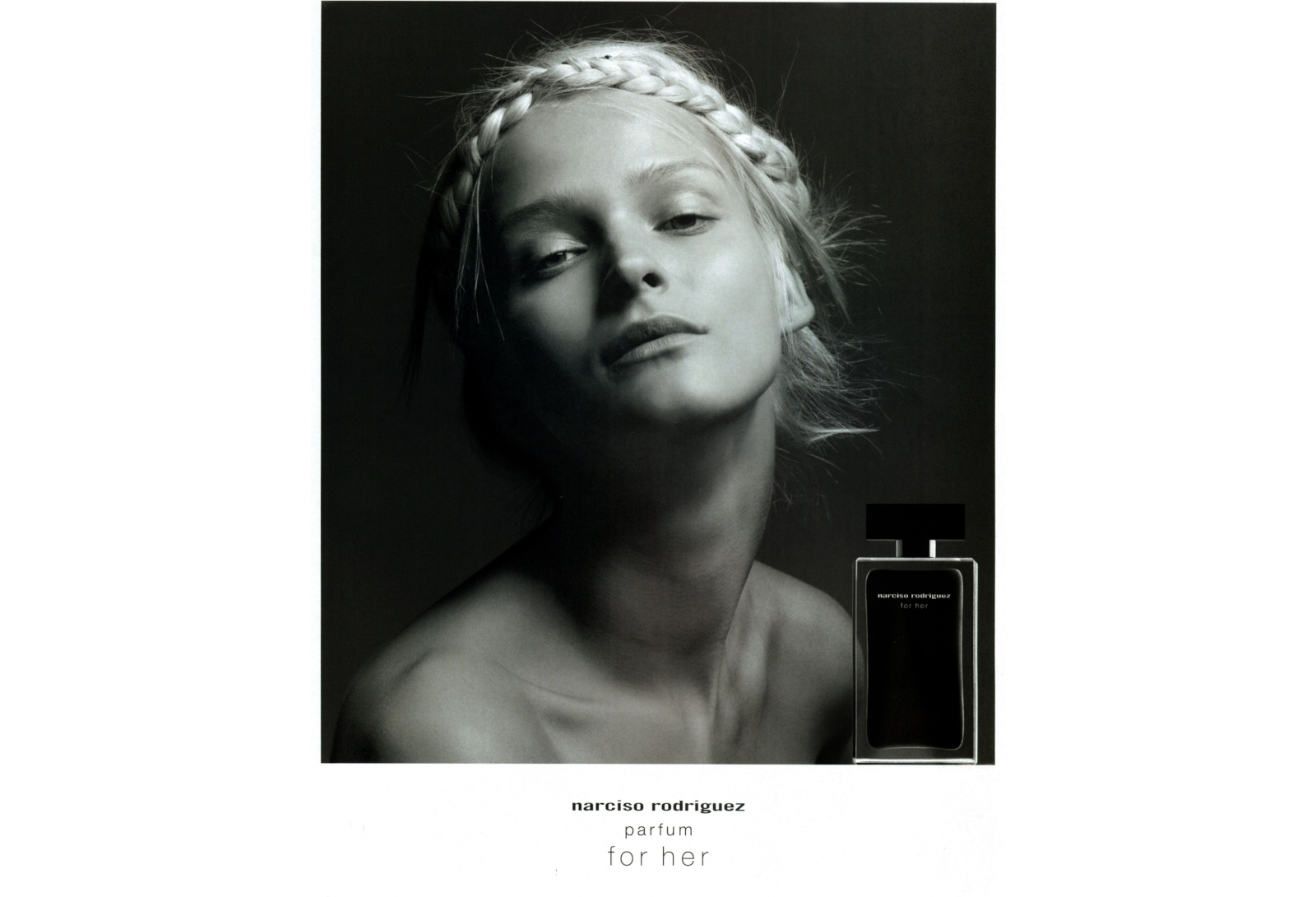
Carmen Kass in the advertising campaign for Narciso Rodriguez for Her, a fragrance created by Christine Nagel and Francis Kurkdjian and launched in 2003
In 2005, Nagel created Miss Dior Chérie for Christian Dior. The original fragrance, associated with a youthful, playful interpretation of the Dior image, became one of the notable launches of the decade. Its fruity gourmand character, including strawberry and caramelised-popcorn associations, distinguished it from more traditional floral interpretations of the Miss Dior name. The fragrance was subsequently reformulated and repositioned, so its original composition should be distinguished from later versions.
Other important works from Nagel's career include The One by Dolce & Gabbana (2006), L'Eau de Cartier and fragrances in Guerlain's Les Élixirs Charnels collection. She also created Sì for Giorgio Armani (2013), a modern feminine fragrance built around a blackcurrant impression, rose and woody notes. These projects illustrate her versatility in translating different brand identities into commercially recognisable scents.
Work with Jo Malone London and MANE
Jo Malone London
Between 2010 and 2014, Nagel served as creative director of fine fragrance at MANE, a French fragrance and flavour company, and produced numerous compositions for Jo Malone London. Her work for the British brand included English Pear & Freesia (2010), Peony & Blush Suede (2013) and Wood Sage & Sea Salt (2014). The latter became one of her best-known creations, combining mineral, woody and aromatic impressions to evoke the atmosphere of a coastal landscape.
Nagel's work for Jo Malone demonstrated her ability to build fragrances around a limited number of clearly articulated materials. Rather than relying on elaborate, heavily layered structures, many of these compositions emphasise the recognisability of individual notes and their interaction on the skin.
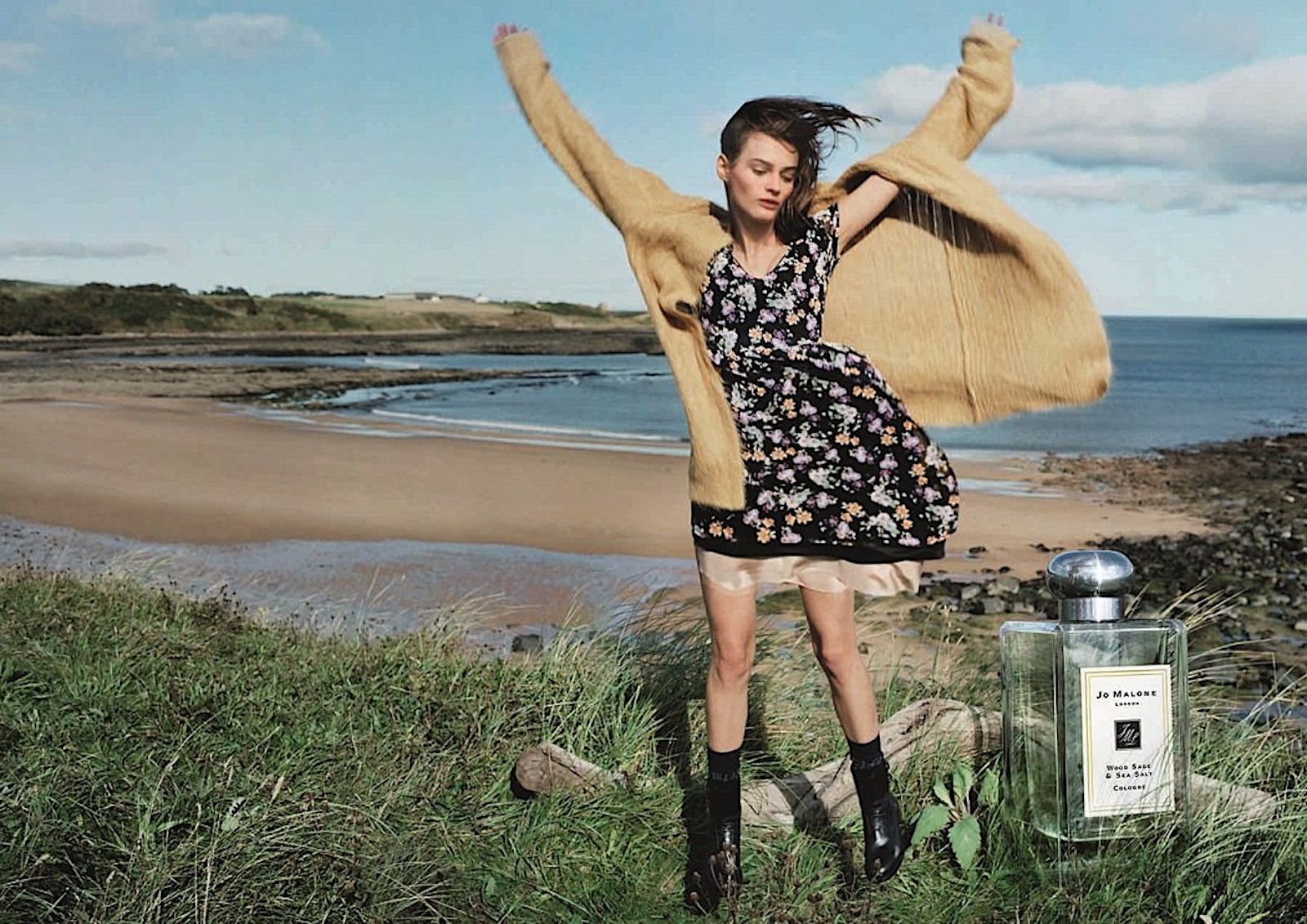
Leadership at MANE
In 2011, Nagel became creative director and head of the company's perfumery school at MANE, a position that brought together artistic direction, research and the development of new perfumery talent. Her earlier work also included Si Lolita for Lolita Lempicka and Archive 69 for Etat Libre d'Orange (2011), the latter illustrating her interest in unconventional, atmospheric compositions.
Her career at MANE strengthened her reputation as a versatile creator with experience in both commercial fragrance development and more experimental projects. In 2014, Hermès announced her appointment as its exclusive perfumer-creator, marking the beginning of a new phase in her career.
Hermès: In-House Perfumer and Director of Olfactive Creation
Appointment and Succession to Jean-Claude Ellena
Nagel joined Hermès Parfums in March 2014, working alongside Jean-Claude Ellena, who had served as the house's in-house perfumer since 2004. She assumed responsibility for the company's olfactory creation and heritage in 2016, succeeding Ellena as the principal perfumer. Her appointment placed her at the centre of the fragrance identity of one of France's major luxury houses.
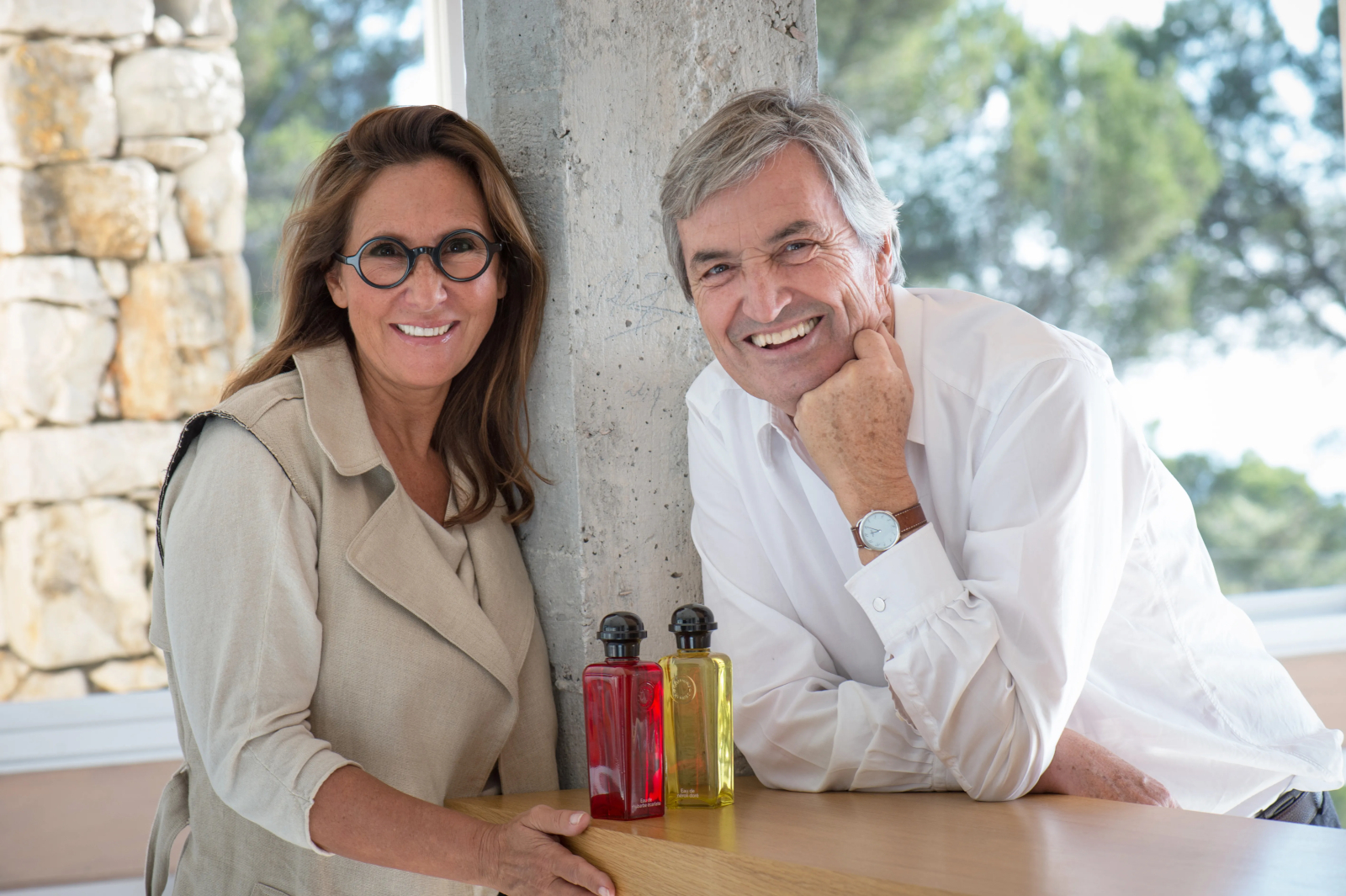
Christine Nagel and Jean-Claude Ellena, who preceded her as the in-house perfumer at Hermès. Nagel joined the house in 2014 and succeeded Ellena in 2016
Hermès described her approach through a combination of scientific knowledge, artistic independence and sensitivity to materials. In its official biography, the house quoted her description of composition as an almost tactile relationship with raw materials, emphasising that each ingredient must be understood in relation to the concept of the fragrance.
Nagel's role extends beyond the creation of individual perfumes. As directrice de la création et du patrimoine olfactif d'Hermès Parfums, she oversees the development of new compositions and contributes to the continuity of the house's olfactory identity.
Major Hermès Fragrances
Selected creations and launches:
- 2016 — Eau de rhubarbe écarlate. A Cologne built around the tart, vibrant character of rhubarb rather than a conventional citrus-led structure. It was Nagel's first fragrance for Hermès.
- 2016 — Galop d'Hermès. A rose-and-leather composition reflecting the house's equestrian heritage and its association with leather craftsmanship.
- 2017 — Twilly d'Hermès. A playful fragrance inspired by the independence and unconventional style of younger women. Ginger, tuberose and sandalwood form its principal olfactory elements.
- 2018 — Eau de Citron Noir. A Cologne that contrasts the brightness of citrus with smoky, woody black-lime facets.
- 2019 — Un Jardin sur la Lagune. Part of the Jardins collection, this fragrance evokes a Venetian garden through floral, woody and musky accords.
- 2021 — H24. A new men's fragrance line developed around an innovative combination of clary sage, narcissus, rosewood and a synthetic note often described as metallic or sclarene-like. It offered a contemporary alternative to the conventional woody masculine fragrance.
- 2023 — Un Jardin à Cythère. Inspired by memories of Greece, the composition combines olive wood, golden grasses and fresh pistachio.
- 2024 — Barénia. A major feminine launch built around a chypre structure, with butterfly lily, patchouli and an accord inspired by supple Barénia leather.
These creations illustrate the breadth of Nagel's work at Hermès, from the freshness of the Cologne tradition to modern woody compositions and the more structured, sensual character of chypre perfumery.
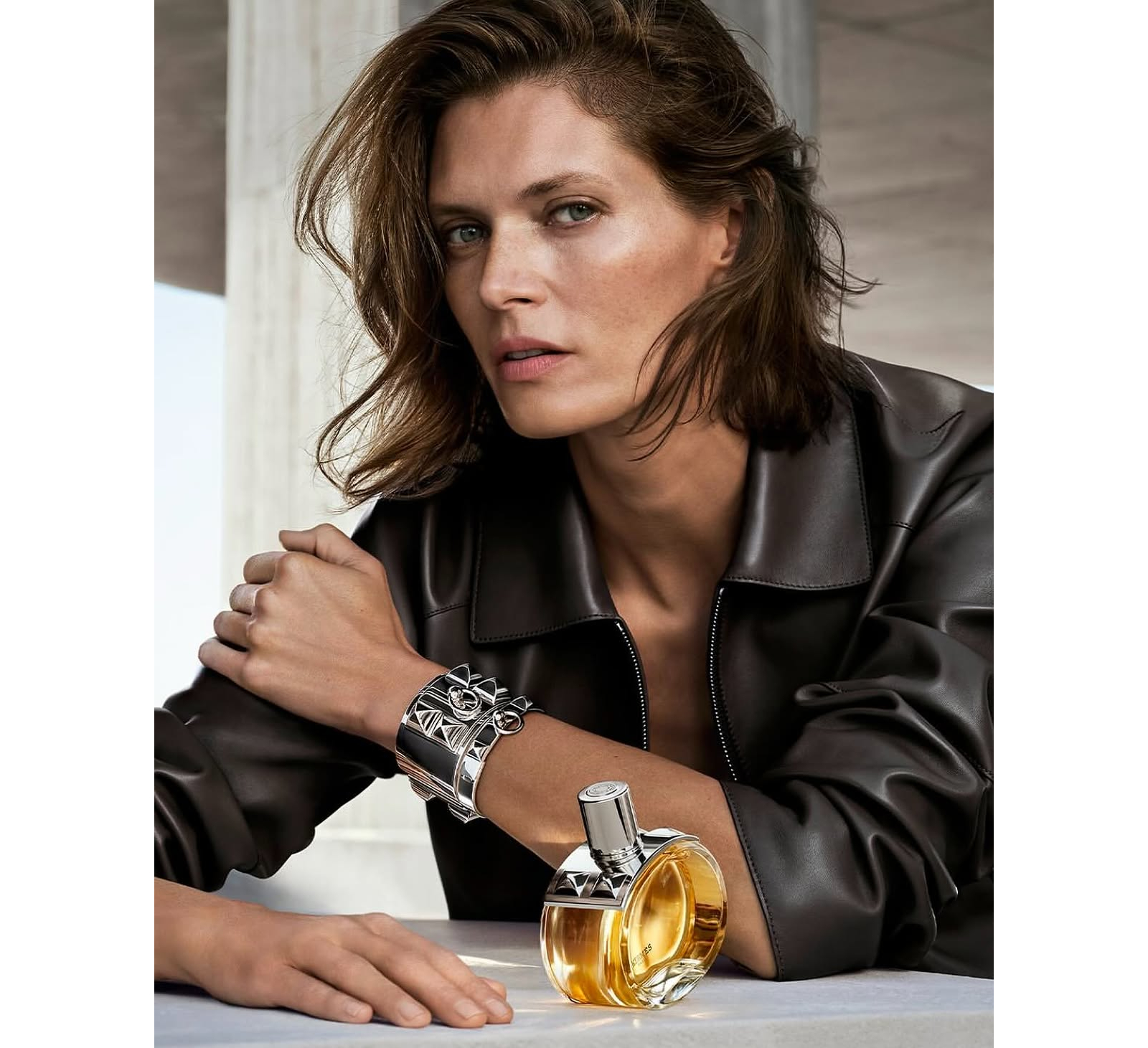
Barénia, launched in 2024, is Hermès’s first chypre fragrance, created by Christine Nagel and inspired by the house’s leather heritage
The Hermessence Collection
In 2018, Nagel introduced five compositions to the Hermessence collection, expanding the house's more exclusive line with two perfume oils and three eau de parfums. These were Cardamusc, Musc Pallida, Myrrhe Églantine, Agar Ébène and Cèdre Sambac. Drawing on traditional perfumery materials and olfactory references associated with the Orient, the collection allowed her to explore the interaction of woods, musks, resins and floral notes within a more intimate format.
Her work on the Hermessence line demonstrates a recurring feature of her approach: a willingness to explore the expressive possibilities of individual materials while maintaining a clear compositional structure.
Creative Approach and Olfactory Philosophy
Nagel's compositions span contrasting styles, from pared-back, transparent fragrances to rich, sensual creations. Her scientific training informs her understanding of raw materials, but she has consistently described perfumery as an artistic discipline rather than simply a technical process.
In an interview published by The Perfume Society, she explained her approach in direct terms:
“I have a creative preference for compositions characterised by simplicity, which mirrors their philosophy.”
The statement reflects her affinity with the Hermès tradition of treating fragrance as an expression of materials, craftsmanship and an individual creative vision.
Nagel has also rejected rigid distinctions between fragrances for men and women. As she told The Perfume Society, “anyone can wear whatever he or she likes”, arguing that there is no absolute right or wrong in the choice of a fragrance. This outlook is reflected in her willingness to experiment with traditionally gendered ingredients and structures.
Her artistic references include painting and colour theory. She has compared the construction of a perfume to arranging colours in a painting, with individual materials interacting through contrast, balance and texture. Her compositions frequently juxtapose natural ingredients with modern synthetic materials, using their differences to produce unexpected effects.
Awards and Recognition
Nagel has received professional recognition for her work from organisations including the Fragrance Foundation France, the François Coty Foundation and the Marie Claire International Fragrance Awards. Her career has also been marked by the distinction of becoming one of the relatively small number of women to hold a leading in-house perfumer position at a major luxury fashion house.
Her influence extends across several sectors of the fragrance industry: commercial designer perfumery, niche fragrance, luxury brand development and the cultivation of new perfumery talent. Her work for Narciso Rodriguez, Dior, Jo Malone London and Hermès has established a portfolio that combines commercially successful launches with experiments in composition and material expression.